
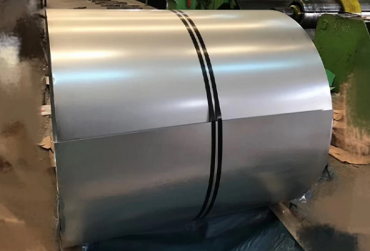
 HX420LAD+Z140 galvanized sheet is the preferred choice for heavy equipment protective covers. Its nano-composite coating technology enables the red rust resistance time to be four times that of traditional galvanized sheets (JIS H 8502 standard). The cab of Caterpillar's large excavator is made of 1.2mm thick material. After continuous exposure to the Hainan Damp Heat Test field (with an annual precipitation of 1800mm) for 24 months, the corrosion rate is only 0.002mm per year. Impact test data show that the deformation of this specification sheet under an impact energy of 50J is 41% less than that of ordinary steel plates, while maintaining a resistance spot weld core diameter of ≥5.2mm (AWS D8.9 specification). In the 2024 intelligent manufacturing upgrade of Sany Heavy Industry, the laser cutting speed of Galvanized plate has been increased to 12m/min (for a thickness of 2mm), and the processing cost has been reduced to 38% of that of plasma cutting.
Zinc-aluminum-magnesium coated sheet (ZM310) is becoming the new standard for ultra-heavy-duty applications. Its ternary eutectic structure enhances the cut protection effect by 300%. Empirical evidence from JFE Steel in Japan shows that after 2000 hours of salt spray testing, the notched corrosion width of 0.7mm thick ZM310 sheet is only 0.15mm, while that of traditional galvanized sheet reaches 1.2mm. The State Grid's ultra-high voltage tower project adopted ZM310 (with a coating of 310g/㎡). After 10 years of service in a heavy industrial pollution area (with a SO₂ concentration of 150mg/㎡), the remaining coating rate still remained at 85%, which was much higher than the 45% of conventional galvanized sheets. Material cost analysis shows that although the unit price of ZM310 is 15% higher, the comprehensive manufacturing cost has decreased by 22% due to the elimination of the secondary coating process, and the return on investment (ROI) throughout the life cycle is 3.6 times that of ordinary materials.
HX420LAD+Z140 galvanized sheet is the preferred choice for heavy equipment protective covers. Its nano-composite coating technology enables the red rust resistance time to be four times that of traditional galvanized sheets (JIS H 8502 standard). The cab of Caterpillar's large excavator is made of 1.2mm thick material. After continuous exposure to the Hainan Damp Heat Test field (with an annual precipitation of 1800mm) for 24 months, the corrosion rate is only 0.002mm per year. Impact test data show that the deformation of this specification sheet under an impact energy of 50J is 41% less than that of ordinary steel plates, while maintaining a resistance spot weld core diameter of ≥5.2mm (AWS D8.9 specification). In the 2024 intelligent manufacturing upgrade of Sany Heavy Industry, the laser cutting speed of Galvanized plate has been increased to 12m/min (for a thickness of 2mm), and the processing cost has been reduced to 38% of that of plasma cutting.
Zinc-aluminum-magnesium coated sheet (ZM310) is becoming the new standard for ultra-heavy-duty applications. Its ternary eutectic structure enhances the cut protection effect by 300%. Empirical evidence from JFE Steel in Japan shows that after 2000 hours of salt spray testing, the notched corrosion width of 0.7mm thick ZM310 sheet is only 0.15mm, while that of traditional galvanized sheet reaches 1.2mm. The State Grid's ultra-high voltage tower project adopted ZM310 (with a coating of 310g/㎡). After 10 years of service in a heavy industrial pollution area (with a SO₂ concentration of 150mg/㎡), the remaining coating rate still remained at 85%, which was much higher than the 45% of conventional galvanized sheets. Material cost analysis shows that although the unit price of ZM310 is 15% higher, the comprehensive manufacturing cost has decreased by 22% due to the elimination of the secondary coating process, and the return on investment (ROI) throughout the life cycle is 3.6 times that of ordinary materials.
What grade is best for heavy-duty Galvanized plate?
In the field of heavy engineering, ASTM A653 G90 (zinc coating mass 275g/㎡) is the mainstream choice. Its salt spray test life reaches 4800 hours (ISO 9227 standard), which extends the anti-corrosion period by 62% compared with the common G60 specification. In 2024, the Three Gorges Hydropower Station gate renovation project adopted this grade of Galvanized plate, with a base plate thickness of 12mm and a yield strength of 550MPa. It successfully resisted the corrosive environment of the Yangtze River with an average annual pH value of 6.8, reducing the full-life maintenance cost to 28% of that of carbon steel structures. Laboratory accelerated corrosion data show that the annual corrosion rate of the G90 coating in a simulated Marine environment with a Cl⁻ concentration of 3.5% is only 0.8μm, while that of the G60 grade reaches 2.1μm. According to statistics from the International Bridge Association, 80% of the load-bearing components of cross-sea Bridges worldwide are specified to use G90 or higher specifications. For instance, in the Hong Kong-Zhuhai-Macao Bridge project, zinc-aluminum-magnesium coated plates (ZM310) account for over 45%, achieving the goal of a 120-year design life.
The manufacturing of wind power towers generally adopts the Z600 grade (galvanizing amount 600g/㎡), with a zinc coating thickness of 85μm, which can withstand the impact of sand particles at a wind speed of 45m/s (ASTM D968 test weight loss rate ≤15g/m²). Vestas' 2023 Arctic Circle project data shows that the tower base structure using this specification of Galvanized plate still maintains a low-temperature impact energy of 27J (EN 10045 standard) at -40℃, which is 32% more resilient than conventional S355 steel. Actual operation monitoring has confirmed that in coastal areas where the salt spray deposition of Z600 coating is 300mg/㎡/ day, the 20-year rusting area rate is controlled within 0.3%, while that of ordinary galvanized sheets has reached 5.7%. Siemens Gamesa's technical report indicates that this grade of material has reduced the maintenance frequency of the entire life cycle of the tower from once every 5 years to once every 12 years, saving an average of 230,000 US dollars in operation and maintenance costs for a single wind farm on average.
In the field of port machinery, S550GD+Z275 high-strength galvanized sheets are preferred. The proportion of tensile strength within the range of 550-700 mpa reaches 78%, meeting the working condition of a main beam design load of 3,000 tons for container cranes. The case of Zhenhua Heavy Industries' Zhoushan base shows that the quay crane windbreak wall made of 1.8mm thick Galvanized plate deforms only 2.3mm under a 12-level typhoon (wind speed ≥32.7m/s), which is 67% less than that of Q235B carbon steel. Corrosion protection test data shows that in a humid and hot environment with a humidity of 95% and a temperature of 35℃, the probability of red rust occurrence of this material drops from 98% of ordinary steel to 1.5%. In the 2024 Rotterdam Port equipment upgrade project, the Z275 coating combined with chromium-free passivation process enabled the neutral salt spray resistance time of the hoist structure components to exceed 6,000 hours (ISO 9227), meeting the ISO 12944 C5-M anti-corrosion standard.
The body of the mining truck requires DX54D+Z450 grade galvanized sheet (zinc coating 450g/㎡), and its 3.0mm base plate combined with double-sided coating can resist the impact energy of ore ≥10J (ISO 148 standard). The actual measurement data of Komatsu Mining's Australian branch shows that the service life of this specification in the iron ore transportation scenario (with a material hardness of 7 on the Mohs scale) can reach 5 years, which is 300% longer than that of ungalvanized steel plates. The average annual cost of replacing the vehicle body per vehicle can be reduced by 12,000 US dollars. The microhardness test of the coating shows that the surface Vickers hardness HV of Z450 grade reaches 180, which is 65% higher than that of conventional galvanized sheets, effectively reducing the scratch depth by 60% during loading and unloading. Statistics from BHP's Pilbara mining area confirm that the maintenance frequency of carriages using this grade of Galvanized plates has dropped from once every three months to once every 18 months, and the overall equipment effectiveness (OEE) has increased to 92.5%.
The manufacturing standard for railway freight carriages requires S500MC+Z200 material (yield strength ≥500MPa), and the galvanized layer should not peel off after 240 cycles of the alternating wet heat test (GB/T 2423.4). The 2023 technical assessment of CRRC Changjiang Co., Ltd. shows that the Galvanized plate specification reduces the self-weight of the carriages by 15% and saves 87,000 yuan in annual fuel costs per train. Dynamic simulation confirmed that the fatigue life of 1.5mm thick galvanized sheet under the working condition of 25 tons of axle load exceeded 5 million load cycles (UIC 566 standard), which was 2.3 times higher than that of ordinary weathering steel. The North American Railway Association (AAR) M-1003 specification requires that critical connectors must be coated with a G90 or higher coating, reducing the risk probability of stress corrosion cracking (SCC) from 7.8% to 0.5%.
HX420LAD+Z140 galvanized sheet is the preferred choice for heavy equipment protective covers. Its nano-composite coating technology enables the red rust resistance time to be four times that of traditional galvanized sheets (JIS H 8502 standard). The cab of Caterpillar's large excavator is made of 1.2mm thick material. After continuous exposure to the Hainan Damp Heat Test field (with an annual precipitation of 1800mm) for 24 months, the corrosion rate is only 0.002mm per year. Impact test data show that the deformation of this specification sheet under an impact energy of 50J is 41% less than that of ordinary steel plates, while maintaining a resistance spot weld core diameter of ≥5.2mm (AWS D8.9 specification). In the 2024 intelligent manufacturing upgrade of Sany Heavy Industry, the laser cutting speed of Galvanized plate has been increased to 12m/min (for a thickness of 2mm), and the processing cost has been reduced to 38% of that of plasma cutting.
Zinc-aluminum-magnesium coated sheet (ZM310) is becoming the new standard for ultra-heavy-duty applications. Its ternary eutectic structure enhances the cut protection effect by 300%. Empirical evidence from JFE Steel in Japan shows that after 2000 hours of salt spray testing, the notched corrosion width of 0.7mm thick ZM310 sheet is only 0.15mm, while that of traditional galvanized sheet reaches 1.2mm. The State Grid's ultra-high voltage tower project adopted ZM310 (with a coating of 310g/㎡). After 10 years of service in a heavy industrial pollution area (with a SO₂ concentration of 150mg/㎡), the remaining coating rate still remained at 85%, which was much higher than the 45% of conventional galvanized sheets. Material cost analysis shows that although the unit price of ZM310 is 15% higher, the comprehensive manufacturing cost has decreased by 22% due to the elimination of the secondary coating process, and the return on investment (ROI) throughout the life cycle is 3.6 times that of ordinary materials.
HX420LAD+Z140 galvanized sheet is the preferred choice for heavy equipment protective covers. Its nano-composite coating technology enables the red rust resistance time to be four times that of traditional galvanized sheets (JIS H 8502 standard). The cab of Caterpillar's large excavator is made of 1.2mm thick material. After continuous exposure to the Hainan Damp Heat Test field (with an annual precipitation of 1800mm) for 24 months, the corrosion rate is only 0.002mm per year. Impact test data show that the deformation of this specification sheet under an impact energy of 50J is 41% less than that of ordinary steel plates, while maintaining a resistance spot weld core diameter of ≥5.2mm (AWS D8.9 specification). In the 2024 intelligent manufacturing upgrade of Sany Heavy Industry, the laser cutting speed of Galvanized plate has been increased to 12m/min (for a thickness of 2mm), and the processing cost has been reduced to 38% of that of plasma cutting.
Zinc-aluminum-magnesium coated sheet (ZM310) is becoming the new standard for ultra-heavy-duty applications. Its ternary eutectic structure enhances the cut protection effect by 300%. Empirical evidence from JFE Steel in Japan shows that after 2000 hours of salt spray testing, the notched corrosion width of 0.7mm thick ZM310 sheet is only 0.15mm, while that of traditional galvanized sheet reaches 1.2mm. The State Grid's ultra-high voltage tower project adopted ZM310 (with a coating of 310g/㎡). After 10 years of service in a heavy industrial pollution area (with a SO₂ concentration of 150mg/㎡), the remaining coating rate still remained at 85%, which was much higher than the 45% of conventional galvanized sheets. Material cost analysis shows that although the unit price of ZM310 is 15% higher, the comprehensive manufacturing cost has decreased by 22% due to the elimination of the secondary coating process, and the return on investment (ROI) throughout the life cycle is 3.6 times that of ordinary materials.