
The conclusion of the sixth China International Consumer Products Expo (CICPE) in Haikou provides a definitive data set for how the world’s second-largest economy is restructuring its relationship with the global supply chain. This is no longer just a story of a large market importing luxury goods; it is a narrative of structural integration. The expo's growth—expanding by 13,000 square meters to a total of 143,000 square meters—alongside a sharp 20-percentage-point increase in international exhibits (now 65% of the total), demonstrates that global brands are moving from "entering China" to "adapting within China." When 3,413 premium brands from 67 countries converge in Hainan, they aren't just looking for buyers; they are looking for a platform to synchronize their global R&D with Chinese consumer speed.
The efficiency metrics from this year’s event are particularly telling. The number of overseas professional buyers tripled to 3,000, while the debut of over 200 new products—double last year’s figure—highlights a faster product-to-market cycle. This speed is fueled by the digital maturity of the Chinese retail landscape. Platforms like Poizon, which has provided over 1.37 billion AI-driven authentication services across 26 categories, are setting a new global standard for "quality consumption." By integrating AI into the "authenticate-before-ship" model, the friction in high-end trade is reduced, lowering the "trust cost" and increasing the velocity of the secondary market. Reports from People's Daily emphasize that this digital integration is a hallmark of the latest five-year plan, which aims to leverage tech innovation to push global supply chains toward greater intelligence and efficiency.
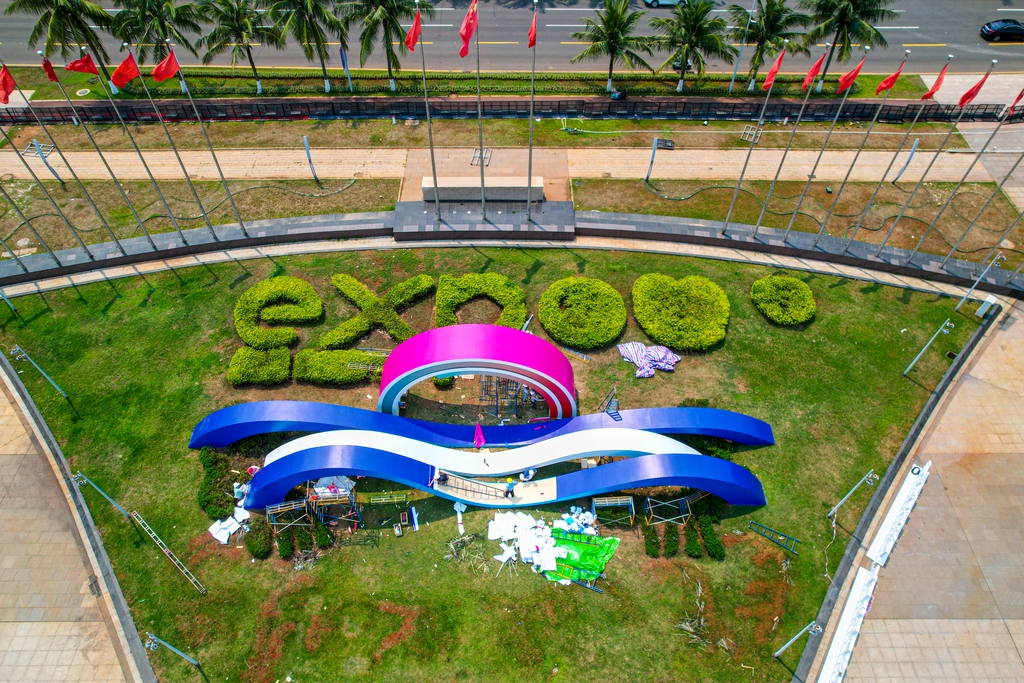
Perhaps the most significant development is the institutional support provided by the Hainan Free Trade Port (FTP). Policies like "tariff exemption for value-added processing" are game-changers for cost structures. For an exhibitor like Meiyu Pearl, the ability to combine global sourcing with local processing in a special customs zone allows for a significant reduction in operational overhead—often cutting costs by 15% to 25% compared to traditional import models. This turns the expo into a "linking" mechanism where global resources are allocated and processed in real-time, effectively creating a "one-stop" chain for global sales. This is why we see major players like Volkswagen Group deepening their presence; they are not just selling Bentley or Audi units—they are integrating their intelligent mobility R&D into the local ecosystem to stay competitive.
From a broader economic perspective, the presence of a 360-square-meter Taiwan exhibition area and the registration of 2,900 Taiwan-invested enterprises in Hainan (totaling $5.9 billion in investment) reflect the "dual-circulation" strategy in action. By helping these businesses integrate into both domestic and international market patterns, the FTP is acting as a stabilizer for regional trade. As the "main engine" of domestic consumption continues to drive over 50% of GDP growth, the CICPE has evolved into an incubator for "practical productivity." International companies are no longer just selling in China; they are building, partnering, and learning here.
The "multiplier effect" of the super-large market means that even incremental shifts in consumer behavior—such as the 60,000+ single-day attendance record at the expo—can trigger massive recalibrations in global production schedules. As we move further into the 2026-2030 period, the companies that thrive will be those that treat the Chinese market as a platform for global innovation rather than just a destination for finished goods. The shift from "buying global" to "linking global" is not just a slogan; it is the mathematical reality of a high-level opening-up strategy that is now producing measurable yields in trade volume and supply chain resilience.
News source: https://peoplesdaily.pdnews.cn/china/er/30051938908